November 2026 · 5 min read · By Adam Schlichting, co-founder and lead installer
Quick answer
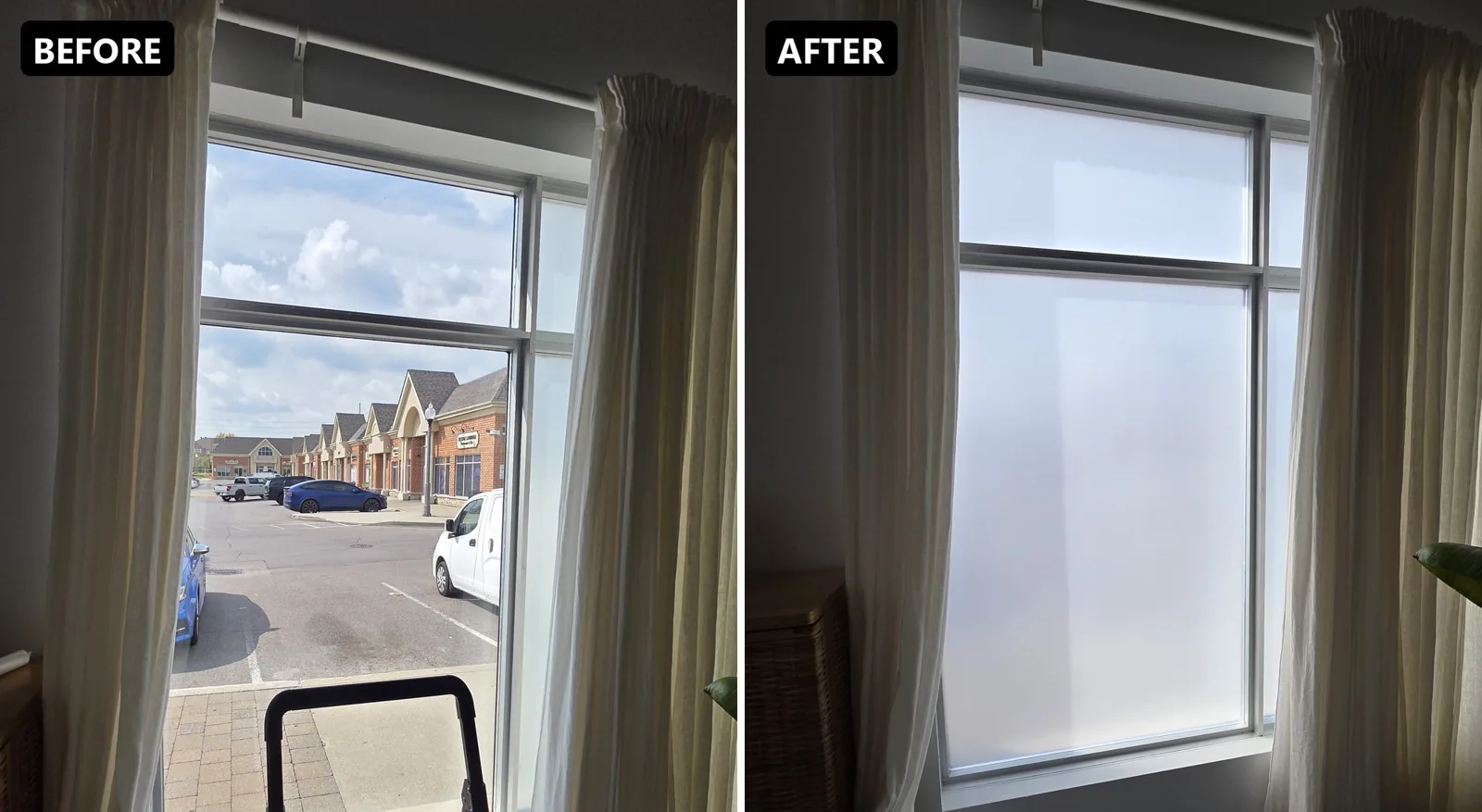
Frosted film for always-on privacy with daylight; blinds for a view you open and close. Frosted window film blocks the view day and night and still lets light in. Blinds give privacy only when closed. Many homes use frosted film on bathrooms and doors and blinds in bedrooms.
Short answer: frosted window film is better when you want privacy all the time and still want daylight. Blinds are better when you want to open the view sometimes and close it other times. Plenty of homes use both. Here is how to choose for each window.
Frosted film and blinds side by side
| Frosted window film | Blinds | |
|---|---|---|
| Privacy | Day and night, always on | Only when closed |
| Daylight | Soft daylight comes through | Closed blinds block most of it |
| View out | Blocked where the film is | Open them for the view |
| Upkeep | Wipe the glass as usual | Slats collect dust |
| Hard-to-cover glass | Fits sidelights, door glass, transoms and showers | Awkward or impossible on many of these |
| Look | Clean, like etched glass; bands and patterns available | Visible hardware and cords |
Where frosted film wins
- Bathrooms and showers: privacy without a wet blind or curtain, and the room stays bright.
- Front doors and sidelights: narrow glass that blinds do not fit well, and where you want light in the hallway.
- Street-level and ground-floor windows you never open the view on anyway.
- Offices and boardrooms: frosted bands give privacy at seated eye level and keep the space open above.
Where blinds still make sense
- Bedrooms where you want the room dark to sleep. Frosted film lets light through, so it will not darken a room.
- Living rooms with a view you want some of the time.
A good middle ground is a frosted band across the lower part of the window: privacy where people walk by, view and sky above. You can try bands, full frost and patterns on a photo in our Frost Designer.
What about one-way film?
Reflective one-way film keeps your view and gives privacy in the daytime, but not at night with the lights on. If you need privacy after dark, frosted film or blinds are the answer. Read does one-way window film work at night? for the full explanation.
What frosted film costs
Frosted and decorative privacy window film is $10 to $12 per square foot installed, with a $599.99 minimum plus HST. See the full cost guide for every film.
Frequently asked questions
Is frosted window film better than blinds?
For privacy that is always on with daylight still coming in, yes. For a view you want to open and close, or a room you want dark, blinds are better. Many homes use frosted film on bathrooms and doors and blinds in bedrooms.
Does frosted window film work at night?
Yes. Frosted film blocks the view both ways, day and night, unlike reflective one-way film.
Does frosted film make a room dark?
No. It softens the light but still lets daylight through. If you need a dark room for sleeping, use blinds or curtains.
How much does frosted window film cost?
$10 to $12 per square foot installed, with a $599.99 minimum plus HST.
About the Author
Adam Schlichting
Co-Founder & Lead Installer
Certified XPEL installer working on homes, storefronts and offices across Toronto and the GTA.
Want this for your glass?
Book a free video or phone call. One recommendation, one clear price.