
When Natural Light
Stops Feeling Good
Natural light is one of the most sought-after features in any space — until the glare, heat, and UV damage make it a problem. Here’s everything you need to know to take control.
Natural light is one of the most sought-after features in any home or commercial space. Architects design for it. Real estate listings highlight it. Homeowners pay a premium for floor-to-ceiling windows. But there’s a tipping point.
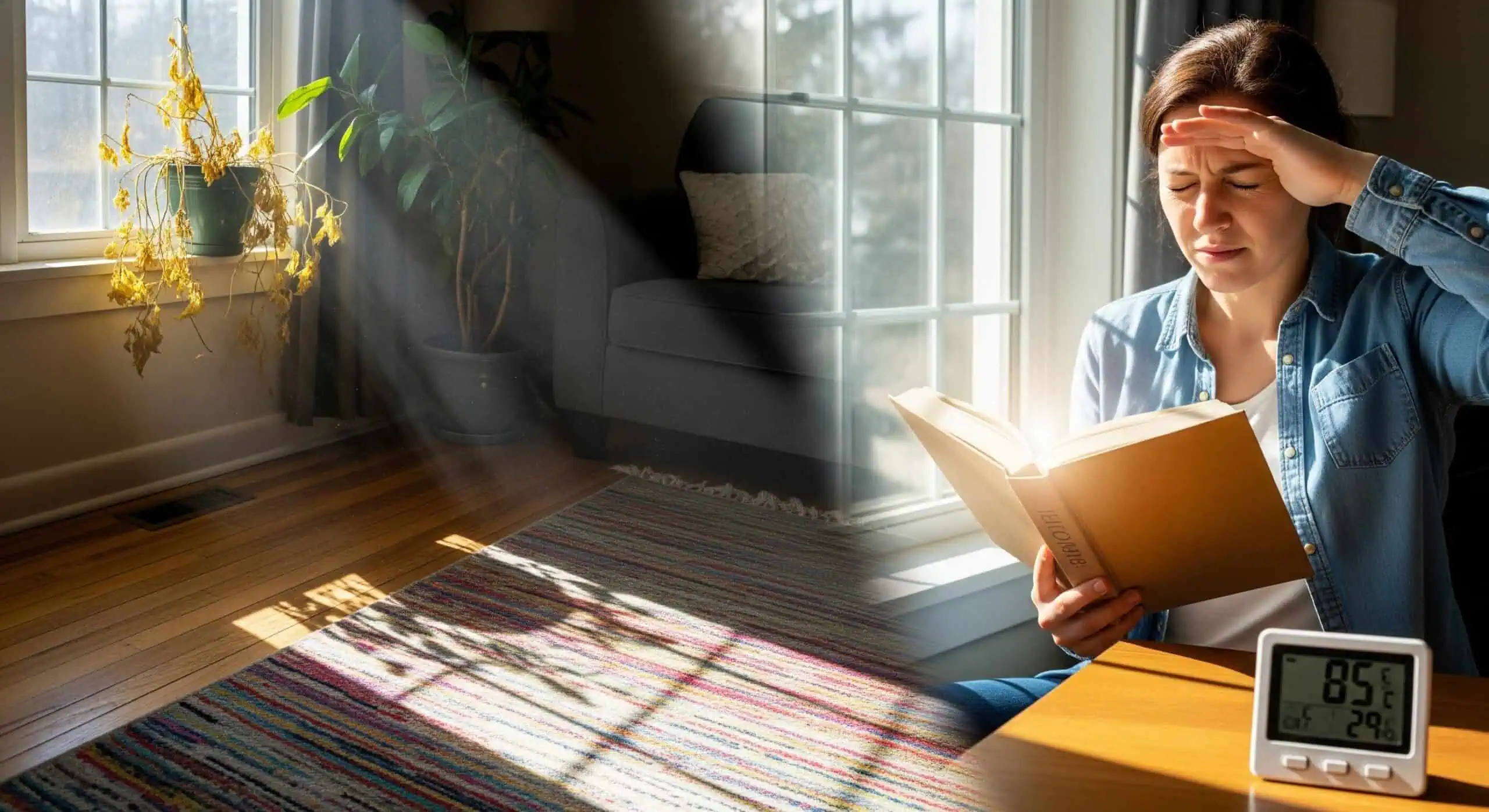
At some point — usually mid-morning in summer, or during a particularly bright afternoon — the light stops being a feature and starts being a problem. You’re squinting at your screen. The living room feels like a greenhouse. The couch cushions have faded. And no matter how many sheer curtains you hang, nothing quite fixes it.
This guide walks you through exactly what’s happening when natural light causes discomfort, what the science says, and what practical solutions exist — specifically for homeowners and businesses across Ontario who want to keep their views, their light, and their comfort.
What Does It Actually Mean When Natural Light ‘Stops Feeling Good’?
The phrase “too much sunlight” can sound almost ungrateful. But for anyone who has sat in a west-facing office in July, or tried to watch TV in a sun-soaked living room at 3 pm, the discomfort is very real. There are four distinct ways natural light crosses the line:
Glare
Direct or reflected sunlight hitting your eyes at an uncomfortable angle causes eye strain, headaches, and reduced productivity — the most common complaint in open-plan offices with large windows.
Excessive Heat
Sunlight carries infrared energy. When it passes through untreated glass, that energy heats floors, furniture, and people — creating hot spots, uneven temperatures, and overworked HVAC systems.
UV Radiation
Invisible and unfelt, UV rays cause cumulative damage. They are the leading cause of fading in fabrics, flooring, and artwork — and contribute to skin damage even with prolonged indoor exposure.
Loss of Privacy
Large windows that invite light also invite visibility from outside. For ground-floor spaces or offices near foot traffic, this creates real comfort and security concerns.
These four problems — glare, heat, UV, and privacy — are the core reasons why natural light stops feeling good. Understanding each one is the first step toward solving them without giving up the light itself.
The Science Behind Solar Energy and Your Windows
Sunlight is composed of three types of radiation: visible light (what we see), infrared radiation (what we feel as heat), and ultraviolet radiation (what causes fading and skin damage). Standard residential and commercial glass transmits all three in significant amounts.
When the sun is low on the horizon it enters windows at a shallow angle, creating blinding glare even on moderately bright days. High overhead in summer, it pours directly into south- and west-facing windows, heating rooms quickly.
According to the U.S. Department of Energy, heat gain and loss through windows accounts for 25 to 30 percent of a home’s heating and cooling energy use. In commercial buildings with glass-heavy facades, the numbers are often higher. Most windows — even modern double-pane units — do relatively little to filter this energy without additional treatment.
Signs That Sunlight Is Becoming a Problem in Your Space
The problem often builds gradually — a slightly warmer room in summer, a TV you’ve started watching with the blinds down, artwork that doesn’t look quite as vibrant as it used to. Here are the clearest signs that solar gain is actively affecting your space:
- 1You Avoid Certain Rooms or Seats During the DayIf you’ve unconsciously started sitting on the north side of the dining table, or if your home office migrated away from the window, that’s glare and heat driving your behavior.
- 2Your Energy Bills Are Higher Than ExpectedWhen solar heat gain raises interior temperatures, your air conditioning runs longer and harder. If cooling bills peak dramatically in summer, your windows are likely a major contributor.
- 3Furniture, Floors, or Artwork Are FadingHardwood floors develop bleached patches near windows. Sofas and rugs fade unevenly. Framed prints lose their original color. This represents real financial loss in furnishing value.
- 4Screens Are Unusable Without Closing the BlindsIf you can only use your monitor, phone, or TV comfortably with the blinds fully shut, you’ve effectively traded your view for basic functionality.
- 5Rooms Feel Hot Even With HVAC RunningHot spots near windows — where air feels noticeably warmer than the rest of the room — indicate that solar energy is entering faster than your cooling system can handle.
Why Traditional Solutions Fall Short
Most people’s first instinct when dealing with too much sun is to reach for curtains, blinds, or exterior shades. These are not bad solutions — but they come with real limitations.
The common thread across traditional solutions is that they trade one problem for another: sacrifice your view, spend significantly on renovation, or accept partial results.
Window film was developed specifically to break this trade-off.Curtains and Blinds
Blackout curtains keep sun out — but they also keep your view out. You end up in a dark room when you want shade, or a sun-drenched one when you want clarity. There’s rarely a comfortable middle ground.
Window Replacement
Upgrading to triple-pane or Low-E glass is legitimate but comes at considerable cost and disruption. Even premium glazing rarely addresses glare and UV as comprehensively as purpose-built solar control film.
Exterior Awnings
Physical shading structures are often ineffective against low-angle morning and evening sun. They require maintenance, may not be permitted by HOAs, and provide no UV or glare filtering for light that enters around their edges.
How Solar Control Window Film Addresses Each Problem
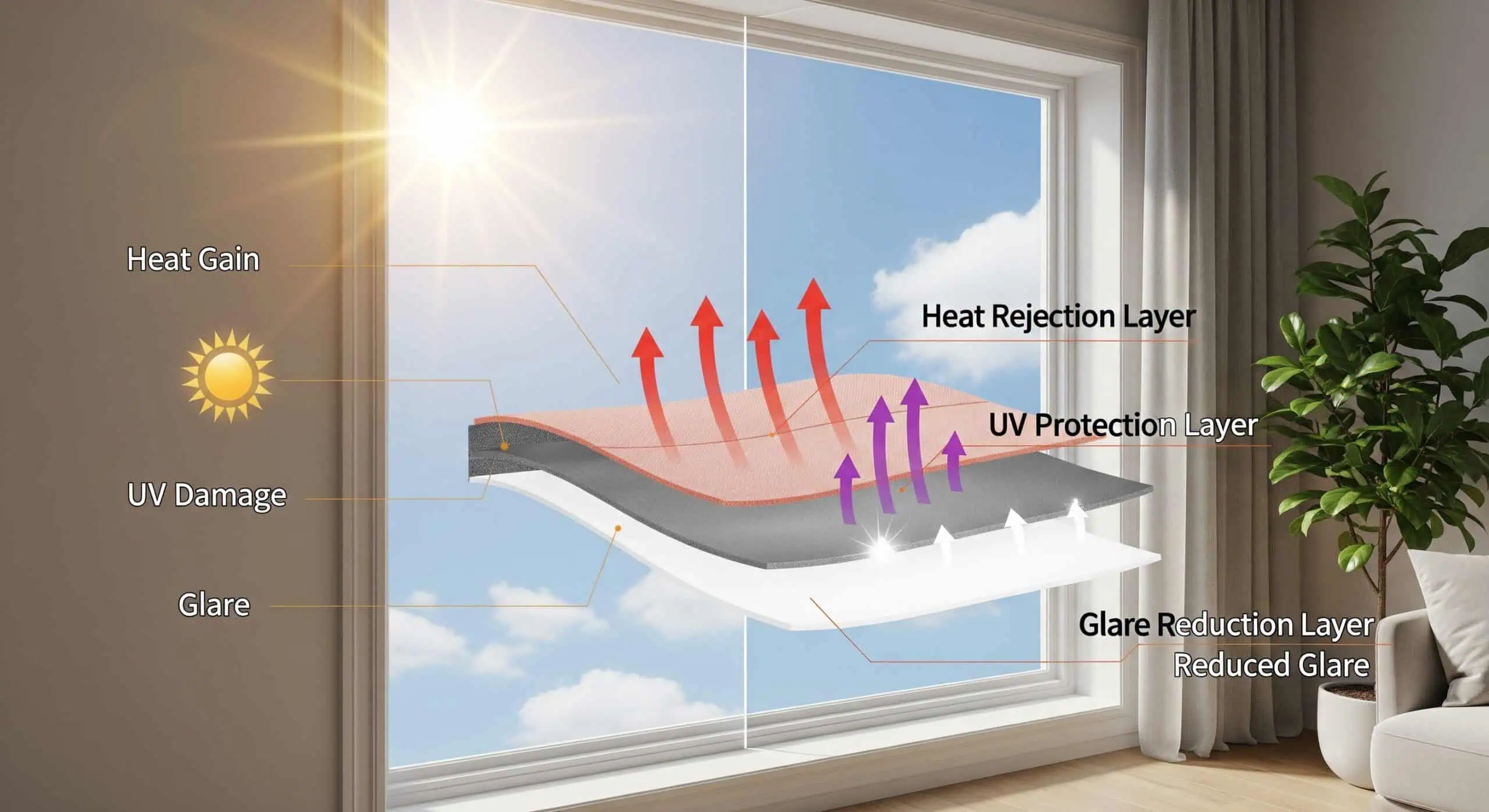
Solar control window film is a thin, optically clear or lightly tinted layer applied directly to interior glass. It selectively filters the components of sunlight — reducing heat and UV while preserving natural light and visibility.

Glare Reduction
Modern solar films cut glare by 50 to 80 percent while still allowing in ample, comfortable daylight. For offices, this translates directly to better screen visibility and reduced eye fatigue throughout the day.
Heat Rejection
High-performance films can reject up to 80 percent of solar heat before it enters the room. By blocking the infrared component, the film acts as a thermal barrier — keeping temperatures stable and lowering the load on air conditioning.
UV Protection
Premium films block up to 99 percent of ultraviolet radiation — far more than standard glass, even modern Low-E units. For homeowners who have invested in hardwood floors or quality furniture, this protection alone is often worth the installation cost. Our residential UV protection window film page covers the technical specs in detail.
Comfort Without Sacrificing the View
Perhaps the most compelling aspect of solar film over curtains and blinds is that it works without obstructing your view. The glass stays clear, your view remains intact, and the problems are handled by the film itself. Explore specific options on our residential window film for comfort page.
Understanding Different Types of Solar Window Film
The right choice depends on your specific problem, your glass type, and your aesthetic preferences. Here’s an overview of the main categories:
Reflective Films
Mirror-like appearance from the outside during daylight hours. Excellent heat and glare rejection, strong daytime privacy. Best for commercial buildings and south- or west-facing windows with significant direct sun.
Neutral / Low-Reflectance Films
Reduce solar heat without visible tint or reflection. Ideal for homeowners who want to keep the natural appearance of their windows while addressing UV and moderate heat gain.
Ceramic Films
The current high end of solar film performance. No metal content means full signal transparency (Wi-Fi, cellular) with superior heat rejection and long-term color stability. XPEL’s premium ceramic films fall here.
Safety & Security Films
Primarily designed for impact resistance and glass retention, many safety films also include a solar component. For spaces where both solar control and structural protection are needed. Learn more about security window film.
Solar Film for Residential vs. Commercial Applications

Residential Considerations
In a home, primary concerns are usually comfort, furniture protection, and energy savings. Film selection should account for orientation (south and west-facing windows need the most attention), room function (a home office needs glare control; a bedroom prioritizes UV), and existing window type. Our residential window film for comfort section covers the right solutions by room and exposure.
Commercial Considerations
Commercial buildings face the same solar challenges at larger scale — plus employee productivity, energy costs across thousands of square feet, and the need for consistent aesthetics across all windows. For commercial projects across the GTA and Southern Ontario, our commercial solar control window film page is a good starting point. For spaces that also require interior zone privacy, commercial privacy window film provides an additional layer of control.
The Energy Case for Solar Window Film
When solar heat gain is reduced at the glass, your HVAC system doesn’t work as hard to maintain comfortable temperatures. Studies on commercial installations consistently show energy savings of 5 to 15 percent on cooling costs, with payback periods often under five years for large projects. Residential results vary, but homeowners with large south-facing glass typically see meaningful reductions in summer utility bills.
For independent performance data, the International Window Film Association (IWFA) publishes solar heat gain coefficients (SHGC) and visible light transmittance values across a wide range of film products.
Heat gain and loss through windows is responsible for 25–30% of a home’s heating and cooling energy use — and solar control film is one of the most cost-effective ways to address it without replacing the windows.
U.S. Department of Energy — Energy Efficiency & Renewable EnergyWhat to Expect From a Professional Window Film Installation
The Consultation
A professional installer will assess your windows, discuss your primary concerns, and recommend products based on your glass type and orientation. At Film Bros, this involves reviewing XPEL’s product specs together so clients see exactly what performance they’re getting before anything is installed.
Preparation and Application
Interior glass is cleaned thoroughly, film is cut to exact dimensions, and a water-based solution is applied to allow precise positioning before the adhesive cures. For most residential windows, each pane takes 20 to 45 minutes. Commercial projects are scaled accordingly.
Curing Period
After installation, film cures over several days to a few weeks depending on temperature and humidity. Slight haziness or small water bubbles may be visible during this time — this is normal and resolves as the adhesive fully cures.
Durability and Warranty
XPEL solar films installed by Film Bros typically carry warranties of 10 to 15 years for residential applications. Review the coverage details on our warranty page.
Is Solar Film Worth It? A Practical Summary
For anyone weighing whether solar control window film is the right solution, here’s a clear framework:
It’s worth it if…
You have glare, heat, or UV problems that curtains and blinds haven’t fully solved. You want to protect furniture, floors, or artwork from fading. You want to reduce cooling costs without replacing windows. Or you work from home and need a more comfortable, screen-friendly environment.
It may not be the right fit if…
Your windows are very small with minimal direct sun exposure. You live in an extremely cold climate where solar heat gain is consistently helpful year-round. Or your windows are near the end of their useful life and replacement is already planned.
For most homeowners and commercial tenants in Ontario’s climate — hot summers, moderate shoulder seasons — solar control film hits a sweet spot between cost, performance, and minimal visual impact. The U.S. Department of Energy’s energy-efficient window coverings guide offers useful framing around the role of solar control in reducing both heating and cooling loads.
Frequently Asked Questions
Common questions about solar control window film for homes and businesses.
Can solar window film make a room too dark?
Not with the right product selection. Modern solar films come in a wide range of visible light transmission levels. A skilled installer can recommend a film that targets your heat and glare problems while preserving the daylight feel of the room. Very few clients report their rooms feeling dark after installation — most describe them as more evenly lit and comfortable.
Does window film work on double-pane or triple-pane glass?
Yes, but product selection matters. Certain high-reflectance or metallic films can cause heat buildup between the panes of insulated glass units (IGUs), which may void the window manufacturer’s warranty. A professional installer will specify films rated for use on sealed IGUs to avoid this issue.
How long does window film last?
XPEL solar films installed by Film Bros typically carry warranties of 10 to 15 years for residential applications. With proper care — avoiding abrasive cleaning products and hard-edged tools near the film surface — the film will typically outlast its warranty by several years.
Will window film affect my view from inside?
For most neutral and lightly tinted films, the effect on the view is minimal and often unnoticeable after a day or two of adjustment. Highly reflective films will give the exterior glass a mirror-like appearance during daylight hours, but the interior view remains clear.
Does window film also help with break-in protection?
Standard solar films hold shattered glass in place but are not engineered for security purposes. For true forced-entry resistance, a dedicated security window film is the appropriate product.
Can I install window film myself?
DIY kits are available, but professional installation is strongly recommended. Improper application leads to bubbling, peeling, and reduced performance, and professional installation is required to maintain the manufacturer warranty. Film Bros offers free consultations and quotes across Ontario.
Ready to Make Your Space Comfortable Again?
Natural light is worth keeping. The heat, glare, and UV damage are worth solving. Film Bros installs XPEL solar control films across Southern Ontario — with a consultation, site assessment, and no-pressure quote at no cost to you.